Flood Insurance Is Mandatory in More Zones Than Ever — Here's What FEMA's New Maps Mean for Your Premium — QuoteZen Analysis
Flood Insurance Is Mandatory in More Zones Than Ever — Here's What FEMA's New Maps Mean for Your Premium
Published 2026-04-09 • Price-Quotes Research Lab Analysis
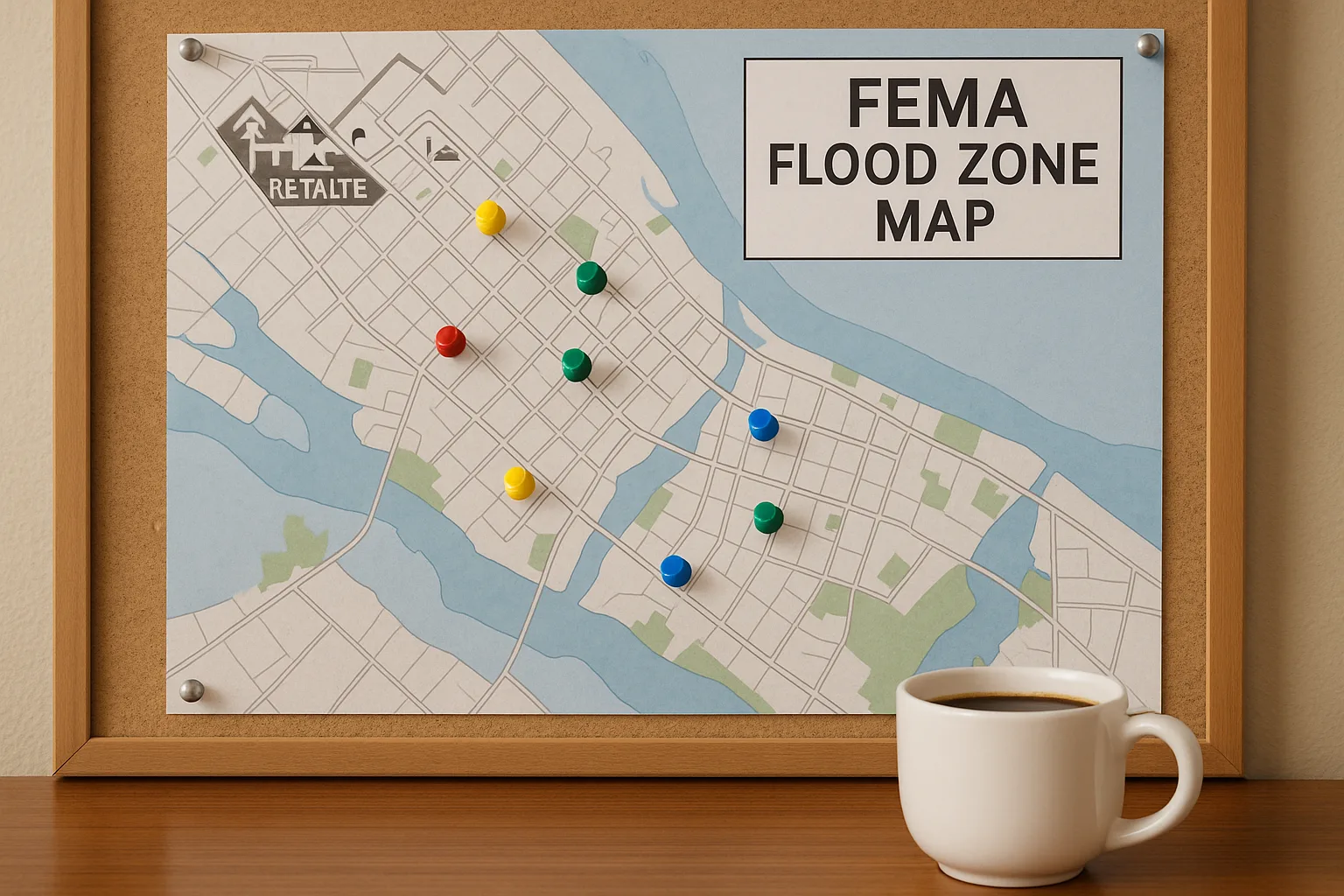
Somewhere in America right now, a homeowner is opening a letter from FEMA. Their property just got redrawn into a high-risk flood zone. They have 30 days to provide proof of flood insurance to their lender — or face a forced placement policy that costs twice what they'd pay shopping around. They didn't build a house on a floodplain. The floodplain moved under them.
That's not hypothetical. That's the new normal. FEMA's ongoing Risk Mapping, Assessment, and Planning (Risk MAP) initiative has been systematically updating Flood Insurance Rate Maps across the country since 2020, and the results have put millions of additional properties into Special Flood Hazard Areas (SFHAs) — zones where flood insurance becomes mandatory if you carry a federally backed mortgage.
How Many Properties Got Redrawn?
The scope is significant. FEMA has processed thousands of Letters of Final Determination since the updated mapping program kicked into high gear, each one triggering a six-month clock for communities to adopt new flood maps or face federal consequences. Communities that don't adopt can lose access to federal disaster funds and flood insurance availability. The pressure to comply means local officials often have little choice but to accept expansions to high-risk zones, regardless of whether property owners agree with the science.
According to Price-Quotes Research Lab analysis of FEMA program data, the number of properties newly mapped into SFHAs has accelerated sharply since 2023. Coastal erosion, improved elevation data from LiDAR surveys, and updated hydraulic modeling have all contributed to more accurate — and more expansive — flood zone designations. What once looked like a safe suburban lot on old paper maps might now be sitting in a mapped floodway based on actual terrain data.
Here's the part most people miss: you don't have to be near a river or coastline. Urban flooding, groundwater rise, and poor drainage in low-lying areas can put properties into high-risk zones even miles from any visible water body. FEMA's updated modeling accounts for these factors in ways the old 1980s-era maps never did.
The Premium Math Changed with Risk Rating 2.0
Even for homeowners who knew they were in a flood zone, the pricing shock has been real. FEMA's Risk Rating 2.0, fully implemented in April 2022, replaced the old actuarial system with a model that prices policies based on actual risk factors: property value, elevation, distance to water, cost to rebuild, and multiple flood hazard metrics instead of a single flood zone designation.
On paper, Risk Rating 2.0 was supposed to be more equitable — lower-income homeowners in modest homes in moderate-risk zones were supposed to see relief. In practice, properties in high-value homes in genuinely risky locations saw the largest increases. The average annual premium nationally crossed $1,000 for the first time in 2024, and the trend shows no signs of reversing.
Properties newly mapped into Special Flood Hazard Areas face mandatory flood insurance requirements from their lenders — and the average first-year premium after a remapping runs $2,400 to $4,800 annually depending on property characteristics.
What Homeowners Can Actually Do
The panic is understandable, but inaction is the worst option. Homeowners in newly mapped zones have several paths forward, and some of them can eliminate the mandatory insurance requirement entirely.
The fastest route: get a Letter of Map Amendment (LOMA) or Letter of Map Revision (LOMR) from FEMA. These official determinations remove a property from a mapped flood zone based on actual elevation data. If your lowest floor sits above the Base Flood Elevation — which you prove with a certified elevation certificate — you can apply and often win. The application fee is modest, and the long-term savings justify the effort. A successful LOMA removes the mandatory insurance requirement and typically drops your premium to near zero or eliminates it entirely.
If the property genuinely sits below base flood elevation, you're likely stuck with mandatory coverage. But you're not stuck with any single insurer. The National Flood Insurance Program (NFIP) Write Your Own carrier market is competitive, and private flood insurers have expanded significantly. Premiums can vary by thousands of dollars between carriers for identical coverage on identical properties. That variance is worth exploiting.
The Lender Trap Nobody Talks About
Here's what the FEMA letters don't tell you: if you fail to provide flood insurance documentation, your lender will force-place a policy. Force-placed insurance is bare-bones coverage at premium rates that often exceed market by 50% or more. The lender doesn't care about shopping around. They care about their collateral being covered. And once force-placed, getting out of it requires proving continuous coverage to their satisfaction — a process that can take months and cost thousands in overlap premiums.
The 30-day window to respond to a new flood zone determination is real. Homeowners who ignore the letter from their lender or their community's floodplain manager do so at significant financial peril. Penalties for lapses, gaps in coverage during the application process for LOMAs, and force-placement fees can compound rapidly.
Communities themselves are under pressure. FEMA's Community Rating System (CRS) offers premium discounts for jurisdictions that adopt higher standards than minimum requirements, but those programs take years to implement. When a map update lands, communities have limited time to adjust building codes, drainage systems, and emergency plans. Property owners who engage with local floodplain administrators early can sometimes influence how new maps are adopted and implemented, especially in borderline cases where technical revisions are possible.
The Bottom Line
FEMA's updated maps reflect a hard truth: climate change has made flooding more common in places that never expected it. The days when flood insurance was something coastal property owners worried about are over. Every homeowner in a mapped flood zone — new or old — should treat flood insurance the same way they treat property tax and homeowners insurance: unavoidable, annoying, and absolutely non-negotiable if you have a mortgage.
Check your property's flood zone status today. Pull your community's current Flood Insurance Rate Map from FEMA's Flood Map Service Center. If your property sits above base flood elevation and you're in a high-risk zone, a LOMA might be the smartest financial move you make this year. If you genuinely need coverage, price it across at least three carriers before accepting any quote.
The flood zone isn't going away. Your premium doesn't have to be a shock if you act before your lender acts for you.